BACKSTAGEAXXESS.com - Where the real show begins!

Rock in the Park @ Harris Park London, Ontario July 22-24, 2010

Attention: open in a new window. PDFPrintE-mail

Last Updated on Thursday, 29 July 2010 23:31 Written by Gus Griesinger Thursday, 29 July 2010 22:52


    One of the great rock festivals of the summer has taken place in western Ontario every year for the past 7 years. This year welcomed an amazing collection of rock bands that included 3 Doors Down, Collective Soul, Thornley, and Crash Karma. Even steady rain didn’t cause one person to move from the front of the stage on Thursday as 3 Doors Down completed their set.
    Friday and Saturday offered a who’s who of classic rock performances. Friday, former Canadian Juno winner, Alannah Myles started off the festivities 4:30 promptly. Looking frail, the singer joked after her 1st track “Our World/Our Times,” saying “If you don’t like what you see, why the hell did you come to see Alice Cooper? If you don’t like what you see, then close your eyes ‘cause I’m here to sing,” she quipped. She went on to say that she is still suffering from a car accident and horse back riding accident. However, unlike her body, her voice hasn’t lost much.
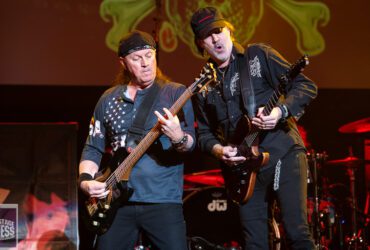
    Next up was the band who stole the show on Friday in my opinion; Night Ranger. The band played a strong set led by original members Jack Blades (bass), Brad Gillis (guitar) and Kelly Keagy (drums). The band never sounded better, and between their sound and showmanship, they left a lot for the other bands to live up to throughout the rest of the festival.
    Peter Frampton was next up and played a solid set that included his hits and a different but interesting cover of Soundgarden’s “Black Hole Sun.” He chatted about how Chris Cornell was one of the best singers on the planet and played the last chorus with his voice box.
    The evening’s headliner was Alice Cooper. Even after all of these years, it’s refreshing to see Alice still be relevant and entertaining as he had numerous costume changes and his show provided a whole new experience from the last time I saw him. Chicago Blackhawks and London, Ontario native, Brain Campbell, brought the Stanley Cup home to London for the day and brought it on stage before the song "Elected." Brian held the Cup over his head and passed it over to Alice to mimic like he was drinking out of the most cherished trophy in North American Sports. He briefly held it over his head for a bit before passing the cup back to Brian. He paraded around stage with it as Alice’s band members took a spot next to him posing for various photos.  He started out with “School’s Out” and closed with the same song when Peter Frampton joined him onstage for the encore and reprise of the song.
    Saturday brought more rain but, fortunately, it ended right before longtime legend Mitch Ryder and the Detroit Wheels took to the stage. The band played a no frills set that included a cover of the Rolling Stones “Sympathy for the Devil” and his own classic, “Devil With a Blue Dress.” Next up was Canadian icons April Wine. They were delayed with some technical difficulties but once they started “Anything You Want” off of 1982’s studio album called ‘Power Play,’ they delivered the goods and showed why they are still loved all over their native land.
    The band that may have stolen the show from the bands I witnessed was Seattle’s favorite daughters, Ann and Nancy Wilson Heart. The band continues to get better and better every time I see them. It’s a wonder how at age 60, Ann Wilson still sings the way she does. The band played a thunderous B-side to open up their set, “Cook with Fire” off of 1978’s ‘Dog & Butterfly’ album. The song featured all members (save Ann) pounding on tom-tom drums.  The band will be delivering a new CD called “Red Velvet Car (Go here: for one of the first reviews of that CD) on August 31, 2010.  Three songs were performed off of the CD: “Red Velvet Car,” “WTF,” and Nancy took vocals on “Hey You.”
    The show and festival closer, Lynyrd Skynyrd, was as tight and fun loving as ever. This band, who endured more tragedies than most bands put together, are still professional and go about their business by giving fans the hits just as they deserve. Even though guitarist Gary Rossington is the sole original member, the rest of the band proved to be a cohesive unit as the Skynyrd Nation went home a happy bunch.
    This festival is the brain child of David and Lindsey McIntyre whose daughter Bethany died from Metachromatic Leukodystrophy (MLD.) With a great production team of Don Jones behind them, they have been able to raise close to 1 million dollars since the 1st Rock in the Park back in 2004. For more information on Bethany’s Hope or to donate, please go to: http://www.bethanyshope.org/.


Set Lists for Friday:

Alannah Myles:

Our World/Our Times
Love Is
Song Instead of a Kiss
Love of Mine
Black Velvet


Night Ranger:

This Boy Needs to Rock
Sing Me Away
Coming of Age (Damn Yankees cover)
Secret of My Success
Sentimental Street
Eddie’s Comin’ Out Tonight
4AM
When U Close Your Eyes
Don’t Tell Me You Love Me
Sister Christian
(You Can Still) Rock in America


Peter Frampton:

Four Day Creep
It’s a Plain Shame
Show Me the Way
Lines on my Face
Restraint
All I Wanna Be
Vaudeville Nana and the Banjolele
Black Hole Sun (Soundgarden Cover)
Nassau Baby/I Love Your way
I’ll Give You Money
Do You Feel Like We Do

Encore:

I Want It Back
While My Guitar Gently Weeps (George Harrison-Beatles Cover)

 
Alice Cooper:

Schools Out
No More Mr. Nice Guy
18
wicked Young Man
Ballad of Dwight Fry
Go to Hell
Guilty
Cold Ethyl
Poison
From the Inside
Nurse Rozetta
Be My Lover
Only Women Bleed
I Never Cry
The Black Widow
Vegenace is Mine
Dirty Diamonds
Billion Dollar Babies
Killer
I Love the Dead
Feed my Frankenstein
Under My Wheels

Encore:

Elected
Schools Out (reprise)


Set Lists for Saturday:

Mitch Ryder and the Detroit Wheels:

Rock N’ Roll
Jenny Take a Ride
When You Were Mine
Latin Lupe Lu
C’est la Vie
Shake a Tail Feather
Gimme Shelter (Rolling Stones Cover)
Devil With the Blue Dress


April Wine:

Anything You Want, You Got It
Before the Dawn
Just Between You and Me
Enough is Enough
Tonight is a Wonderful Time to Fall in Love
Last Time I’ll Ever sing the Blues
Say Hello
Lady Run, Lady Hide (acoustic)
Slow Poke
Fast Train
I Like to Rock
Roller
Gypsy Queen


Heart:

Cook with Fire
Heartless
Never
Straight On
These Dreams
Hey You
Kick It Out
Red Velvet Car
Alone
WTF
Magic Man
Crazy on You
Barracuda

Encore:

What Is & What Should Never Be (Led Zeppelin Cover)
Love, Reign o’er Me (The Who cover)

Lynyrd Skynyrd:

Working for the MCA
I Ain’t the One
Skynyrd Nation
What’s Your Name?
Down South Jukin
That Smell
I Know a Little
Simple Man
Gimme Back My Bullets
Tuesdays Gone
Gimme Three Steps
Call Me the Breeze
Sweet Home Alabama

Encore:

Free Bird

_ small
_ small
_-10 small
_-11 small
_-12 small
_-13 small
_-14 small
_-16 small
_-2 small
_-3 small
_-4 small
_-5 small
_-6 small
_-7 small
_-8 small
_-9 small
london rock in the park 2010 002 small
london rock in the park 2010 003 small
london rock in the park 2010 004 small
london rock in the park 2010 025 small
london rock in the park 2010 035 small
london rock in the park 2010 047 small
london rock in the park 2010 072 small
london rock in the park 2010 078 small
london rock in the park 2010 1076 small
london rock in the park 2010 1081 small
london rock in the park 2010 1104 small
london rock in the park 2010 134 small
london rock in the park 2010 145 small
london rock in the park 2010 172 small
london rock in the park 2010 219 small
london rock in the park 2010 258 small
london rock in the park 2010 305 small
london rock in the park 2010 316 small
london rock in the park 2010 395 small
london rock in the park 2010 408 small
london rock in the park 2010 419 small
london rock in the park 2010 432 small
london rock in the park 2010 493 small
london rock in the park 2010 505 small
london rock in the park 2010 528 small
london rock in the park 2010 531 small
london rock in the park 2010 546 small
london rock in the park 2010 605 small
london rock in the park 2010 617 smaller
london rock in the park 2010 620 smaller
london rock in the park 2010 622 small
london rock in the park 2010 623 small
london rock in the park 2010 625 small
london rock in the park 2010 626 smaller
london rock in the park 2010 650 small
london rock in the park 2010 651 small
london rock in the park 2010 663 small
london rock in the park 2010 696 small
london rock in the park 2010 698 small
london rock in the park 2010 707 small
london rock in the park 2010 709 small
london rock in the park 2010 715 small
london rock in the park 2010 725 small
london rock in the park 2010 730 small
london rock in the park 2010 756 small
london rock in the park 2010 770 small
london rock in the park 2010 782 small
london rock in the park 2010 821 small
london rock in the park 2010 831 small
london rock in the park 2010 838 small
london rock in the park 2010 860 small
london rock in the park 2010 883 small
london rock in the park 2010 962 small
 

   We would like to thank Brad Jones and Gianna Conte of Don Jones Productions for allowing Backstageaxxess.com to attend and cover such a wonderful event!

    Editors Note: We were unable to attend the 1st day on Thursday so no photos shown are from that day. Also, for whatever reason, we weren’t able to obtain a Lynyrd Skynyrd photo pass on Saturday. So the photos we do have were taking from outside the photo pit.


George Thorogood Interview

Attention: open in a new window. PDFPrintE-mail

Last Updated on Monday, 19 July 2010 21:42 Written by Thom Jennings Monday, 19 July 2010 01:37


    George Thorogood has built a successful career as a live performer, getting his first big break in 1981 as the opening act for the Rolling Stone's. His unique blues-based style is heard on hits like "One Bourbon, One Scotch, One Beer," "Move it on Over" and" Bad to the Bone." Thorogood recently spoke with Backstageaxxess.com about everything from his longevity to Muddy Waters to Radio Disney.

Thom: My first memories of George Thorogood and the Destroyers go back to 1981 when you opened for The Rolling Stones at Rich Stadium. Journey was also on the bill and I remember thinking that it was a strange triple bill.
George Thorogood: Really?
Thom: We all understood why you had the opening slot because your music is compatible with the Stones, but Journey seemed like an odd choice at the time.
George: Well you have to remember that The Rolling Stones are businessmen first and last. Journey had a number one song out at the time and an album that was really hot. Now I am the type of person that when I go out on a tour I try to make sure the two acts are compatible musically. The Stones will get somebody that is hot in the critic's eye or really heavy in the charts. They did that with Guns and Rose. At the time Guns and Roses were outselling the Stones and that's the same reason they got Journey for the 1981 tour. I understood why they worked with The J. Geils Band, because they were originally a blues band. People just don't think that way anymore - Bill Graham used to-   but all they think about now is who will sell tickets and if they have a big hit out. That is the world of the big-time promoters.
Thom: Do you ever look at some of the bills you are put on and say, "this just doesn't make sense."
George: A lot of the time, we manufacture the bill ourselves. Last year we worked with Johnny Lang and the summer before it was Buddy Guy. Therefore, we usually dictate whom we play with. Sometimes they hire us independently for concerts; we recently did one with Gary U.S Bonds on it and played a show with Journey over in Europe.  We usually dictate who we want in the lineup with us and a lot of times promoters will say, "Well, I don't know if that opening act will draw anybody." The Destroyers are an enigma to book. We don't sell enough records to fill up a big room like we used to, and at the same time we say we are willing to go on before somebody else does and the bands say, "Hold on. I'm not going on after Thorogood," because we have such a heavy live act and so I say, then get somebody like ZZ Top or Steve Miller that is so legendary that it won't matter.
Thom: It still must matter to some degree?
George: What I mean is that their act will be heavy because they have so many hits. We did that with Santana, because Santana is a God! So that worked. Many times, I will go to a contemporary of ours and say, "Let's do a tour together" and they'll say "No, I'm not going on after you," and so I'll tell that that they can go first and they'll say, "No, I'm too big a star for that." If it was up to me I'd say just book J.Geils, Steve Miller and us for the rest of our life and I don't care who goes on when, but that is not how it works.
Thom: Is it better to be a great live act these days? It seems like the recorded product just doesn't mean as much these days and that if a band is going to survive they have to be a great live act.
George: In the early days of the industry, the fifties, sixties,and it panned out in the seventies, people got hired because of their live act. That's why they hired Elvis Presley. He didn't even have a drummer and he was opening up for Hank Snow. Back then, everybody had a flashy live act, Little Richard, Chuck Berry and James Brown. That's how you made your legacy, that's how you got people's attention, that's how the Young Rascals got signed to Atlantic. Bands like The Rolling Stones and other people kept going to a club called "The Phone Booth" on Long Island, it was called The Phone Booth because it was so small and it was packed with people. The Young Rascals played there night after night and they finally got a record deal. That is how it used to happen and in some respects that is how it happened with us. You sold your act onstage and then you resold it on TV the way The Beatles did on the Ed Sullivan show, but that is not how it's done anymore. Rarely do record executives say that there is a hot act playing down the street and you have to see them live. Look at Janis Joplin, she blew everybody away at Monterey Pop but before that nobody had heard of her, she had a record and it was barely out. She blew everybody's mind and then Columbia went out and signed her right away. That was the name of the game, which is what I grew up around.
Thom: In order to survive in the industry you have to have a good live act, you certainly fall into that category.
George: That is my act, period! If you listen to the records you go, "Oh that's nice, that's interesting, that's a pretty cool song," and then you see us live and say, "I want all the records!" That is our act, it always has been and always will be.
Thom: And you still loving playing live don't you?
George: I love it because I am successful at it. If I had done it all this time and had not been successful at it I might have said to myself, "Am I missing something? I know I am good at this." That happened for awhile so I knew we had to get a record deal to get people's attention. It was a case where one hand washed the other, Rounder Records saw us play live and they wanted us to make a record. Before that I was not going to go any farther than the 80 seat bar I was playing in until I got a record deal to get me out of it. I'm much happier about it now because my bills are paid and I have a trust fund for my daughter's college and of course I am a lot happier than I was when I was 26 and sleeping on people's floors while telling them I was going to be great someday. (laughs)
Thom: Do you accept your greatness?
George: I guess I wouldn't use the word "greatness,"  I just accept where we ended up. I accept that because it's where I wanted to end up. There was a pitcher for the Dodger named Orel Hershiser, and in 1988 he was starting the second or third game of the World Series and all the writers were questioning him and somebody said "Orel, we are so impressed with your poise, you are so relaxed, so confident and this is the World Series."  Finally someone said that to him once too often and he wasn't angry but he looked at the guy and said, "Listen, I'm not surprised about being here, I have been working on this since I was ten. This is my destiny, to pitch in the World Series, it has been my project since I was ten." I understood that. Orel wasn't shocked that he was in the World Series, and that's not being conceited, that is what he planned and I admire that.
Thom: At what point did you know you were going to make it?
George: I guess it's when you pick up a guitar and play for some people and they say "You should make records someday." That is when you know it.
Thom: It seems like there were some of the old blues guys that didn't really make it.
George: Like who?
Thom: Well Muddy Waters certainly wasn't appreciated for a large part of his career and went through a very dark period.
George: Everybody goes through dark periods when you are in a business. You couldn't get near Muddy Waters in 1952, at that time he was as big in Chicago as Sinatra was in Vegas. He was the top bluesman, Muddy was always successful. There was a dip in the early 1960s then there was a blues revival after the English guys came along. Then Muddy was back on track. As long as you're playing and putting out quality records you're making it. It is kind of like saying, "Oh he's batting seventh for the Phillies" and I say, "Wait a minute, he's still in the majors!" Muddy was always successful. I opened for him, people were paying money to see him play, that is the bottom line. Then people say he should have been more successful, which he would have been if he recorded something like "Superstitious" he would have been bigger, but he was still big. It just depends on the person; what level of success is considered "big," but in reality you are only as big as your hits. It's really not how great you play or whatever, it's the material you put out that gets you to the level of "big." Look at B.B King, "The Thrill is Gone" got him on The Ed Sullivan Show. Without that song I don't think he would have made it. I have had people come up to me and say, "How come you are doing so much better than me, I play better than you do and you used to open for me." I tell them, "I'll give you three reasons, "Bourbon, Scotch and Beer," "Move it On Over," and "Bad to the Bone."(laughs) And I'll tell you that is why Muddy kept working while other blues guys didn't, Muddy had "Hoochie Coochie Man" and "Got My Mojo Working." They were blues hits. Everybody hopes to get a big song. Tom Jones, when he was twenty four, he was almost ready to cash it all in. He was really despondent and didn't know what he was going to do, and then someone asked him if he would sing a demo for a new movie called "What's New Pussycat." He didn't think much of it but the movie comes out six months later and the next thing you know Tom Jones isn't playing in bars anymore.
Thom: Muddy Waters is a legend and you worked with him and The Rolling Stones. After meeting them and working with them did your opinion of them change?
George: No, the only opinion I had about them was that they had great music.
Thom: Do you ever get star struck being around those guys?
George: Always! I always have, always do and always will be. I first met Bo Diddley in 1979, and then I ran into him again in 1982 and we made a video
together. Then we performed together at Live Aid in 1985. I bumped into him numerous times and not long ago our tour manager from England asked "Who is this Bo Diddley bloke anyway?" I told her who he was and she asked if I knew him and I told her we performed together, did a video together, I talked to him on the phone.  But I'll tell ya, every time I saw that guy walk onstage I thought (screaming) "That's Bo Diddley!" I never lost that.

Thom: With regard to your style, you have hit on a formula that really works. So many artists seem to struggle with the notion of sticking with a tried
and true formula. Have you ever been to a point in your carreer where you said, "Man, I have got to change things up and do something different."

George: All the time! (laughs) But I can't. I listen to guys like Marty Robbins, Willy DeVille, Chris Isaak or Jack Johnson and think, "I would like to do something like that," but when I try it things get really dirty really fast. Usually in about 14 seconds! (laughs)
Thom: What do you have to lose at this point of you try something different?
George: There is no need to, it is an exercise in futility. Do people want to see Woody Allen make a Western? John Wayne do Shakespeare? You strike a nerve or a vein with an audience and you stick with it. That's what I did and that's why you are talking to me right now.
Thom: Do you wonder why some artists abandon what works?
George: You can't please everybody, if you stick with the same bag critics call it "the same old thing" and say "when is he going to change?" When you do something different they say "what the hell you doing that for?" You can't win with the critics so you may as well play for the people that support you. The people want more "no respect" jokes from Rodney (Dangerfield) and why do you think there were five Rocky movies? There's a demand for it. If you own a restaurant that is packed every night and everything on the menu is selling, why change it? I look at myself as a restaurant owner, I feed the people the music they want to hear. I say "What do you want?" They say "Bourbon, Scotch and Beer," and I say, "You Got It!"
Thom: So what are you listening to these days?
George: Jonas Brothers, Miley Cyrus. Radio Disney. I got a twelve year old! I have no choice about what I want to listen to! (laughs)

Thom: One final question, there were rumors floating around a while ago that you were being considered as a replacement for Ron Wood in The Rolling Stones. If they asked you to take the job would you?
George: I heard that rumor before but they never approached me.
Thom: If they had, would you have taken it?
George: No way, I want Jagger's job! If they want to replace him, then I am ready! Put me out front, I don't need the guitar. If you want me to join that band, that is the position I want!

We would like to thank Tony Prado from Lobeline Communications for setting up the Interview with George.  For more information on George and his current touring information (he will be playing Artpark in Lewiston, NY on July 27, 2010), please go to: http://www.georgethorogood.com/.


Richard Patrick of Filter Interview

Attention: open in a new window. PDFPrintE-mail

Last Updated on Friday, 16 July 2010 03:37 Written by TJ Jennings Friday, 16 July 2010 02:17


     Richard Patrick is the frontman for the band Filter, and one of the co-founders of the supergroup Army of Anyone.  Richard took the time to talk about Filter's latest album 'Trouble With Angels' and give us a sneak peak at his future plans.  Richard is not only a talented musician, but an all around awesome guy to talk with!  I hope you enjoy reading this as much as I enjoyed talking to Richard!

TJ: I Just reviewed "The Trouble with Angels' and it is a great album. This is Filter's fifth album, so what was this most recent recording experience like?
Richard: Bob Marlette's involvement in this thing was great. He has worked with some heavy hitters like (Black) Sabbath. He understands heavy, he knew we had to bring that "Short Bus" vibe back into it. He's also a great all around songwriter and because he is a great songwriter, it helped finish tracks way faster. I guess around the early part of the 2000s, I just wasn't completing songs fast enough. I wasn't getting to the ideas that I wanted to. I guess that's why I did Army of Anyone. Then when I was in Army of Anyone, I  just really realized how much I missed Filter. So when I went back and did "Anthems," which was a special album because it was geared towards the friends and family of a friend of ours who was killed in Iraq; it was a myopic record, a protest record against the Iraq War and support for the troops record.
TJ: And that all leads up to working with Bob Marlette...
Ricard:  The funny thing is that I met Bob right after I got out of rehab and we talked about possibly working together, but I didn't feel like I needed help writing. Then I went into this bizarre odyssey of Army of Anyone and that was a journey away from Filter, so when I came back to Filter, I realized that I did want to write songs with someone and so I called Bob up. Actually, John 5 wrote "Drowning" with me and Bob, so he reintroduced me to Bob and the next thing you know we are talking about doing a record. Then Bob says "let's just do it, let's do a record," and I asked him what we were going to do for a label and he just said "let's worry about that when we're done." It was amazing!  He was a huge champion for this record. You know, our first meeting he said to me "Rich, I know you're sober. I know you're growing up and you got kids. You’re a man, you got a mortgage and you're a responsible adult now, but what happened to the kid who wrote 'Hey Man, Nice Shot?' What happened to the kid who would go off on these adventures, get in trouble, get arrested, where is that kid?" I told him that is still me.  I have those experiences and he said "Well that's what I want you to talk about." So "Drug Boy" was the first song we worked on together and I had to dive back into my craziness and remember my attitude and my attitude was f##k you!  I was going to do whatever kind of music I wanted to.  If you didn't like it, you could suck my balls. That was my attitude back then, so when we started doing "Drug Boy,""Absentee Father" and other stuff, it was for us.  I wasn't trying to appease a record label or get on the radio.  This record is our record, it is a Filter record. Even though it's fifth, it feels like the second or the third. It's about getting back to making a record for the fans that understood me and getting me into the mindset and bringing the goods and writing some great songs. Now, it's about educating the public and getting it to them.
TJ: You mentioned Iraq and how "Anthems" was about the war in Iraq. Why did you choose to stray away from the more lyrical political side of Filter for 'Trouble With Angels?'
Richard:  It's like, once you get that out of your system... it's like 'there I said it'.  Then it's kind of like going back and saying who was the guy who was the 25 year old kid, doing psychedelic drugs and on some adventure at four o clock in the morning in Cleveland riding bridges.  It was like "where the hell did that kid go?"  He wasn’t worried about war, he was worried about staying sane.  If there is a little bit of a theme with the album it's, ya know, the trouble with angels.  When Galileo discovered the telescope and he noticed the planets weren't revolving around the earth, they were revolving around the sun, that went against the church and they turned it in to the inquisition imprisoned him.  That's the trouble with angels, he was holding back, the church was holding back scientific discoveries because it went against what they were talking about.  In life there's a dichotomy to every situation, you would think that angels are good, but for Galileo and the rest of science, not so good.
TJ: Well it's clear that you put a lot of thought into the title of the record, and it seems as though you really put a lot of dark emotions into this record, where did they come from?
Richard: Jaycee Dugard!  You can't even make that story up about her. She was kidnapped at age 11 and held in the backyard of some pervert's house for 18 years, and that inspired me to write "To Catch a Falling Knife." It's not her story, but it's like, how the hell can somebody be imprisoned for 18 years?  How the hell can something like that happen?  Life has amazingly bizarre phenomenon's in humanity.  For me, I always found it interesting to write about things that are really truly disturbing and trouble me. After I got sober and everything, I started to realize ‘Wow! I’m just a normal person and this is the world.  Check out this guy!’ I think it’s interesting to almost put myself in the position of, almost like, a character and write songs.
TJ: So you really put a lot into writing the songs for this album, did that have anything to do with the delayed release date?
Richard: The lyrics actually jumped out and immediately hit me. Like when I did relapse, I used to chant with the dealers or fellows "drink it, drink it snort it, smoke it!" and I immediately heard the rhythm of the guitar and drums. Stuff just kind of popped out.  I didn’t really have to dig. Again, it was working with Bob (Marlette). It was like Bob, how do I do this melody and Bob was like... hey do this, and I was like yeah!  It gave me more tiime to focus on the lyrics and tell the story. It’s like "Down with Me," I literally tell the story of a murder suicide.  To me, the darker side of life is fascinating.  I kind of wrote a record like “hey everybody it’s ok to be sober and be happy."   I kind of did that with Army of  Anyone and some other records, but I found that with my audience, they’ve been through the ringer too. And the people that got "hey man nice shot" got "take a picture" and all that stuff.  Ya know, we're all leading amazingly crazy lives.  I think it helps them to relate.  It's like 'good I'm not alone.'
TJ: How do you think your audience will react to this album?
Richard: I would hope that their reaction is “this is the band that we fell in love with in the first place and this is what we loved about 'Short Bus' and 'The Amalgamut.'  This is the record we've been waiting for and I'm gonna get that and enjoy every second of it. This is for the people that put me on the map in the first place. This (album)  is written totally with the audience/fans in mind. That's the most important thing that they should know.
TJ: Now what was it like going from recording an album with the supergroup Army of Anyone and then coming back to Filter?

Richard: After 'Army of Anyone,' I was like “I miss Filter, do you guys miss STP?” I heard Dean Deleo say in an interview it's like going home.  Ya know, Filter is my thing.  It's my band.  The funny thing is people go “well we want the original members” and I'm like... oh really?  “You want me and a drum machine with Brian being the engineer/producer?"  That’s the original band, me and a guitar and bass and drum machine. That’s what the original concept was. In fact, it wasn’t even a concept, it was like ‘do you know any drummers? No! Ok, we're gonna have to, like, program something.' But anyways, this time it was like, this time we had Bob, and he was there every step of the way.  It wasn’t like here are these songs; alright, let's just record it.  With Bob it was like, hey dude, and he would take the guitar out of your hands, play something and go" I think you should do this at the end of your chorus."  Ya know most producers don’t do that. So when Marlette started collaborating with me on that level, it was like the moment I went "Wow! Filter is not necessarily something I have to struggle over, it’s something I have to complete'."  So Bob would like finish these songs and it just made the whole thing amazing. It was smooth. We did fourteen (14) tracks of drums in two days. You can spend weeks on drums. It's expensive and it’s a pain in the ass.  That’s the point where I go "it's easier just using a machine," but everything was so well organized  that it just went smooth.  It was almost like I wish I had been doing this the last ten years. It was so easy and so much fun.
TJ: Do you plan on bringing Bob on again in the future?
Richard: I wanna bring Mitch Marlow in. I got this new band I'm working with, Rob Paterson from Korn will be writing on the next record. I've already kind of planned another record because it was so fun working with Bob. It was like imagine if we just had Mitch with us for like three weeks and everybody throws in ideas and we just write the greatest rock record we can. The whole record was just really inspiring. Many records I worked on in the past, it was like pulling teeth. This record was just like...wow... I wish I was doing this the whole time. This time it was like...wow... I know what I wanna talk about. It's like "Drug Boy." It's that song about when I was 23, just running around Cleveland after NIN tours, running around the city with these crazy kids I kind of grew up with, then writing "tonight these chemicals are god, tonight these chemicals are sunlight." To me, that was just like I would have never come up with a lyric that made that much what made sense back then. Then writing the chorus like "you're trying to help me and all I'm thinking is it’s the biggest waste of time" and to me that sums up what it's like to be frustrated in America. Writing that stuff, it was just so easy. It was not a labor and usually you can tell things are easy when they sound good.  I think that’s why you gave it a good review. It's like, "it sounds like they had fun."
TJ: Well what are your plans for the future? Will Filter be the main focus from now on, or do you want to do something like Army of Anyone again?
Richard: Filter is gonna be my attention for the next duration. I'll never obviously say no to anything and I'm even thinking about doing a Damning Well record. It was great to work with Wes and Danny and Josh. But to be honest, I haven’t talked to those guys in years. I need to focus on Filter.  It deserves me and my attention and I have to make sure it's taken care of. It deserves that! Filter should be doing great things.

We would like to thank Kymm Britton of 60 Cycle Media for setting up the interview with Richard of Filter. For more information on Filter and their new CD, please go to: http://www.officialfilter.com/.

Richard Patrick photo by Chapman Baehler

Filter group photos by Corey Nickols


Lady Gaga @ Air Canada Centre, Toronto, Ontario July 11, 2010

Attention: open in a new window. PDFPrintE-mail

Last Updated on Friday, 16 July 2010 04:29 Written by Allan Robertson Thursday, 15 July 2010 09:58


    Lady Gaga brought the intensely theatrical Monster Ball Tour back to Toronto and this was the first of two consecutive sold out shows. But before the show even began, there was a scene at the soundboard as Elton John was in attendance and fans flocked closer to take photos. At 9pm a white circular curtain came down and Gaga was seen dancing in silhouette for the opening number “Dance in the Dark.” The singer was finally revealed standing on top of a fire escape staircase in a purple jacket with big shoulder pads, sunglasses, a leopard body suit and black knee high boots. The stage featured metal scaffolding throughout with neon signs flashing everywhere and a cool fluorescent green car up front. For the next song, “Glitter and Grease,” she popped open the car hood to obtain a synthesizer apparatus to play. She then, along with her dancers, ventured out on a catwalk leading up to a small circular stage on the floor. Gaga went on about creating the Monster Ball so that her fans had a place to go, a place where all the freaks are outside and she locked the doors. “It doesn’t matter who you are or where you come from because tonight, and every night after, you can be whoever it is that you want to be!!”
    After six songs the curtain came down to show visuals of Gaga getting tattooed and then rose to reveal an actual subway car on stage featuring the singer in a white flying nun outfit and “LoveGame” was performed. She also had a staff that housed a powerful spotlight that was used to scan the crowd. Gaga stated she had a pretty tremendous dick and told the crowd to “Get your dicks out and dance motherf**kers!!” After “Money Honey” parts of the scaffolding folded out of the way to reveal her band members, except for the two guitarists, who were always up front rocking out. “Canada was the first place to believe in me,” Gaga stated before mentioning the Re*Generation Homeless Campaign; a charity that she strongly believes in and that Virgin Mobile donates a portion from every show to. Before “Telephone,” she called up a random person in the crowd (shown on the video screens) and the ecstatic female fan got moved up front and given backstage access.
    For “Speechless” Gaga was elevated up to the stage while lying on top of a black iron looking piano which later lit on fire and had flames spiraling from the top. Her vocal on this tune was incredible and touching. She proceeded to play the next song “You and I” on piano as well. She called herself “Lady MacGyver” as she fixed her headset microphone earlier and assured everyone that she does indeed sing live on stage. Gaga then went out on the catwalk only to get engulfed by a giant video screen twister that lowered from the ceiling. The next wardrobe change featured “the living dress” that is a stunning peacock looking bridal dress complete with wings and a train. “Monster” saw a new set change, which simulated Central Park with cool rustic trees, huge lampposts and park benches with razor blade backs. She asked the crowd “Do You Think I’m Sexy?” as she was covered in blood as a result of a simulated feeding frenzy courtesy of her zombie dancers. “Alejandro” featured a water fountain with an angelic statute that had fire shoot out resembling wings. For “Paparazzi” a massive piranha/octopus- looking monster filled the stage and consumed the singer. She did, however, return wearing an outfit with sparks shooting from her chest and crotch. During the encore break cameras surfed the crowd with night vision on and the images were shown on the screens. For the last song “Bad Romance,” Gaga rose up on stage strapped inside spinning spheres wearing a sparkly, metallic, pointy outfit. Before she left the stage a fan threw up a Canadian flag with the pride colors on it, which she proudly held up for all to see. Throughout the 125-minute performance Gaga played various synthesizers and musical gadgets and there were many costume changes featuring some really whacked out fashions. Elevated lifts were used all around the stage and even on the catwalk. During the musical interludes, interesting and sometimes graphic and controversial video footage was displayed. The stage show felt like a twisted take on “The Wizard Of Oz” with a sprinkle of Andy Warhol and Tim Burton thrown in.
    You don’t need to like the music to appreciate this highly visual production; it caters to anyone that enjoys being entertained.

 
Set List:

Dance in the Dark
Glitter and Grease
Just Dance
Beautiful, Dirty, Rich
Vanity
The Fame
LoveGame
Boys Boys Boys
Money Honey
Telephone
Speechless
You and I
So Happy I Could Die
Monster
Teeth
Alejandro
Poker Face
Paparazzi

Encore:

Bad Romance

Photos by Gus Griesinger

img_1946 small
img_1946 small
img_1947 small
img_1950 small
img_1956 small
lady gaga  air canada centre  toronto ontario 7-11-10 014 small
lady gaga  air canada centre  toronto ontario 7-11-10 019 small
lady gaga  air canada centre  toronto ontario 7-11-10 041 small
lady gaga  air canada centre  toronto ontario 7-11-10 048 small
lady gaga  air canada centre  toronto ontario 7-11-10 059 small
lady gaga  air canada centre  toronto ontario 7-11-10 061 small
lady gaga  air canada centre  toronto ontario 7-11-10 084 small
lady gaga  air canada centre  toronto ontario 7-11-10 107 small
lady gaga  air canada centre  toronto ontario 7-11-10 121 small
lady gaga  air canada centre  toronto ontario 7-11-10 219 small
lady gaga  air canada centre  toronto ontario 7-11-10 226 small
lady gaga  air canada centre  toronto ontario 7-11-10 227 small
 

We would like to thank Kathy O'Donnell from Livenation Canada for helping Backstagaexxess.com in reviewing the show. 


Rock Photographer Mark Weiss Interview

Attention: open in a new window. PDFPrintE-mail

Last Updated on Wednesday, 14 July 2010 04:10 Written by Gus Griesinger Tuesday, 13 July 2010 01:39


    As Backstageaxxess.com continues to bring you intriguing and exclusive interviews with the artists that matter to you most, we also realize that the music business is comprised of much more than just the artists that perform on stage. Backstageaxxess.com wanted to “focus” on a different aspect of what you, the reader, sees and hears about. Recently, we spent an afternoon with one of the most famous rock photographers on the planet; Mark Weiss. Mark invited Backstageaxxess.com to his home to do an exclusive interview with him.
    We were treated to a tour and saw some of his gold records and his cabinets of files holding photographs that have spanned an impressive 35-year career. We talked about his close relationships with such artists as the late Ronnie James Dio to Buffalo’s own Rick James. We also talked about his reclamation of the rock magazine called “Rock Scene.”  Let’s join Mark behind the lens and see the music through his eyes…

Dim lights Download Embed Embed this video on your site  

We would like to thank Mark Weiss for allowing Backstageaxxess.com for this exclusive interview. For more information on Mark, please go to: http://www.weissguygallery.com/ and http://rockscene.com/blog/.


Page 1 of 2

Banner